

Tourist Destinations
Tourism is a very important development tool for a country. It not only fuels the economic growth of the region, but also contributes to the preservation of nature, cultural heritage, and unique arts. By inviting tourism investments, new job opportunities are created for local residents, thereby raising the standard of living and improving infrastructure.
Kottiyoor, where nature is at its best, has many places that captivate tourists. The hills that seem to touch the sky, the lush green valley, the clean and calm Bavali river, the waterfalls, the fascinating caves at the bottom, the dense forest, the mysteries, the tribals, their villages, and their unique culture are all enough to attract tourists.
The panchayat is fully supportive of promoting the tourism sector. The tourism potential of Kottiyoor has been boosted by the government's support in encouraging investments and developing projects to attract tourists.
Kottiyoor Mahadeva Temple
Kottiyoor is believed to be one of the 108 Shiva temples established by Parasurama. The place mentioned as 'Thricherumanna' in William Logan's Malabar Manual is Kottiyoor and Kottiyoor is also mentioned in Vadakkanpattu and other folk songs. There are two temples here on both banks of the Bavalipuzha. On the northern bank of the Bavali is the Akkara' temple and on the other bank is the Ikkare temple. On the one side, the Kottiyoor temple performs daily pujas every day for eleven months and is open to devotees. On the other side, Kottiyoor is only allowed to enter during the Vaisakhamahothsavam. Kottiyoor is blessed with Shiva Panchakshari mantras during the Choti Nakshatra of the month of Vaisakh. During this period, Kottiyoor is most crowded. The Vaishakhamahotsavam, attended by lakhs of devotees, is one of the largest gatherings in Kerala. The Akkarekottiyoor temple, which allows daily pujas and entry for only 28 days in Kollam, is left polluted after the festival and entry is not allowed after that.
Legend:- According to the Shiva Purana, Kottiyoor is the holy land where the Dakshayaga was believed to have taken place. When his daughter, the beauty of the three worlds, Sati Devi, reached marriageable age, Daksha, the king of the universe, organized a swayamvara. Nobles, scholars, and princes arrived to marry Sati. However, at the swayamvara stage, it was Lord Shiva, who adorned Sati Devi with his hair.
After some time, Dakshan Prajapati decided to invite all the gods of the world and perform a great sacrifice. But Lord Shiva was ignored by him from the sacrifice. Unable to bear this injustice of her own father, Sati Devi ignored her husband's prohibition and set out for the sacrifice. When she reached the sacrifice site, Dakshan humiliated her on the altar. Due to the humiliation, the goddess immolated herself in the sacrificial fire. When Lord Shiva learned about Sati Devi's sacrifice, he became furious. He created Veerabhadra from his three eyes. Veerabhadra beheaded Dakshan, and the sacrifice was interrupted. The gods, who knew the consequences of interrupting the sacrifice with the death of the protector, were terrified and tried to calm Shiva. Legend has it that when Shiva's anger subsided a little, he allowed the sacrifice to continue by placing the head of a nearby goat on Dakshan's body at the request of the gods.
The idols of Brahma, Shiva and Vishnu are said to have become 'Kottiyoor' over time. Or it is said that the carved city (where Veerabhadra beheaded Daksha) became Kottiyoor. It is said that the nearby places like Mandamcheri, Palukachi, Palchuram etc. are named after myths related to Shiva and Parvathi. The stories that are being circulated must have been invented by the imaginative ancients in the light of the Puranas.
This sacred land, hidden by nature for ages, was re-emerged through an unexpected event. While hunting in the forest, the Kurichya tribe members stepped on a stone to sharpen their arrows and were horrified to see blood flowing from it. They reported this miraculous phenomenon to the nearby Padinkitta Namboothiri. The Namboothiri, who was well-versed in Tantra, understood that there was a divine power behind this incident.
On the instructions of Padinkitta Thirumeni, the tribals informed the Karanavanms of the four prominent families of Manathana village, namely Kulangarayam, Aakkal, Karimpanakkal Chathothu and Thittayil. The four of them, along with Padinkitta Namboothiri, reached the spot and found a stone flowing blood in the forest. Despite performing purification rituals with water, ghee and milk, the flow of blood did not stop. Finally, the blood stopped only when Ilaneer was anointed.
According to astrologers, this place was the holy land where the Daksha Yagya was performed, and the stone flowing blood was understood to be the Swayambhu Shivalinga. According to mythology, Shiva appeared in the Swayambhu form near the place where Sati Devi immolated herself in the sacrificial fire.
Sri Shankaracharya, with his spiritual vision, regulated the rituals of this temple. Even today, the Kottiyoor temple attracts devotees, retaining its ancient history and spiritual significance.
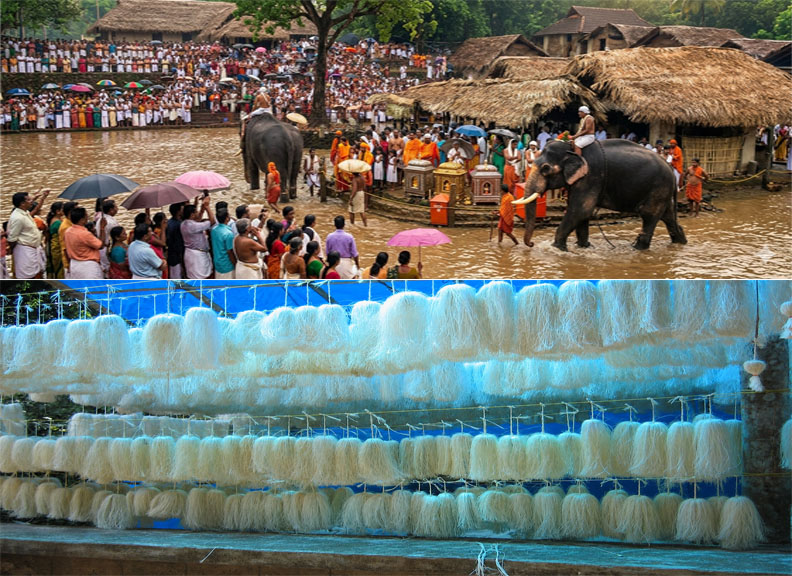
The Vaishakha Mahotsavam is celebrated in the months of May-June (from the Chothi day of the Vaishakh month to Makam). The special feature of this festival is that the rain participates in all the rituals of the festival as a silent presence. When the devotee takes a dip in the holy bavali, holds the hand of the rain and circumambulates the Thiruvanchira, he feels like he has descended into the past, connected to nature. It should be specially mentioned that the Vaishakha Mahotsavam also has a broad perspective that people from Namboothiri to Kurichyar, regardless of caste, perform the rituals of the festival with a gentle breeze blowing through the hair of the Sahyan, reinforcing the eternal truth that nature and man are complementary to each other.
According to calculations, the area required for the construction of the temple on the other side is so large that it would be impossible to build a building of this size. Therefore, the temple still exists in the form of several small temples, about 72 in number. In the center of the circular water tank is a semicircular "floor" called Manithara, a place called "Swayambhu" surrounded by water. It is believed that Thiruvanchira is the place where the blood that was scattered when Veerabhadra destroyed the yaga is buried. When a devotee faces east and west and prays at Manithara, the circular floor seen on the left is the 'Ammarakkal floor' where Sati committed suicide. The shelter created for the yaga gave way to the thatched huts seen today. The priests and temple authorities live in such huts. Today, there are different sheds in Koothambalam, Kalavara, Ochhar, Ullattu Manushwa, Kuttipathikal, Kanakapillai, Asari, Moosari, Kollan, Kurichiyan (Ottappilan). The main offering of the festival is believed to be the beard of Odapuvu Dakshan. All the processes of cutting the immature Odas, peeling them, crushing them into Odapu, combing them and selling them are done locally.
Palchuram Waterfall
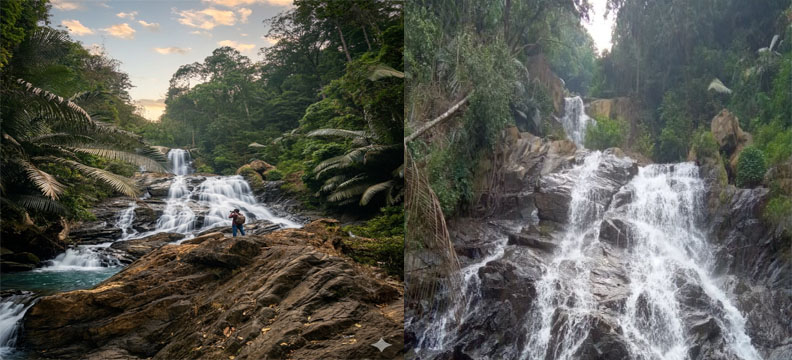
Another attraction in Kottiyoor is Palchuram Waterfall. Palchuram Waterfall is located at the bottom of the Chekuthan Thod on the border of Kannur and Wayanad districts. The waterfall, which flows down from the hills of Wayanad and enters Kannur district, falls like pearls from a height of about 300 meters and is in four tiers. The waterfall, which stands amidst evergreen forests, has absorbed all the mysteries of the forest and is enchanting, and water is stored under it by nature. One of the factors that attracts tourists is the fact that even in the scorching summer, you can enjoy the cool water that is filled with tears.
The path to Palchuram Waterfall starts from the Ashram Junction, which is about halfway up the difficult pass. On both sides of the dirt road, for about a kilometer and a half, there are private farms. The gentle breeze that has settled in the lap of the Bavali River welcomes the travelers to the slope where cashew, guava, guava, castor and rubber trees stand proudly under the burden of the labor of the migrant population. From time to time, one or two small streams can be seen flowing with clear water, cutting through the path. It is clear that nature has prepared that clean, cold water for travelers to wash away their fatigue and exhaustion. The dirt road ends near an old iron bridge. Then, on a steep climb, there is a guava garden. The gentle breeze peeking out from the forest edge will swirl rhythmically on their heads. Shrubs grow along the path that leads from the edge of the grove into the forest, forming a single-track path. They warmly welcome travelers who approach nature, touching, patting, and shaking their heads.
As you carefully move forward through the slippery stones, the waterfall calls out to you and draws you closer to it without you getting lost. Her first sight is captivating. With her hands that are hidden in her cunning, Bavali caresses those who come to see her, as if tempting them to come closer to her. With the enchanting presence of the forest in the background, an adventurous traveler cannot sit idle. The waterfall is most beautiful during the monsoon season. However, the reality is that tourists visit it even in the scorching summer. Where hundreds of people visit every day, there is a presence of wild animals. Since there are no regulations, traveling after 5 pm is not encouraged.
Palukachi View Point
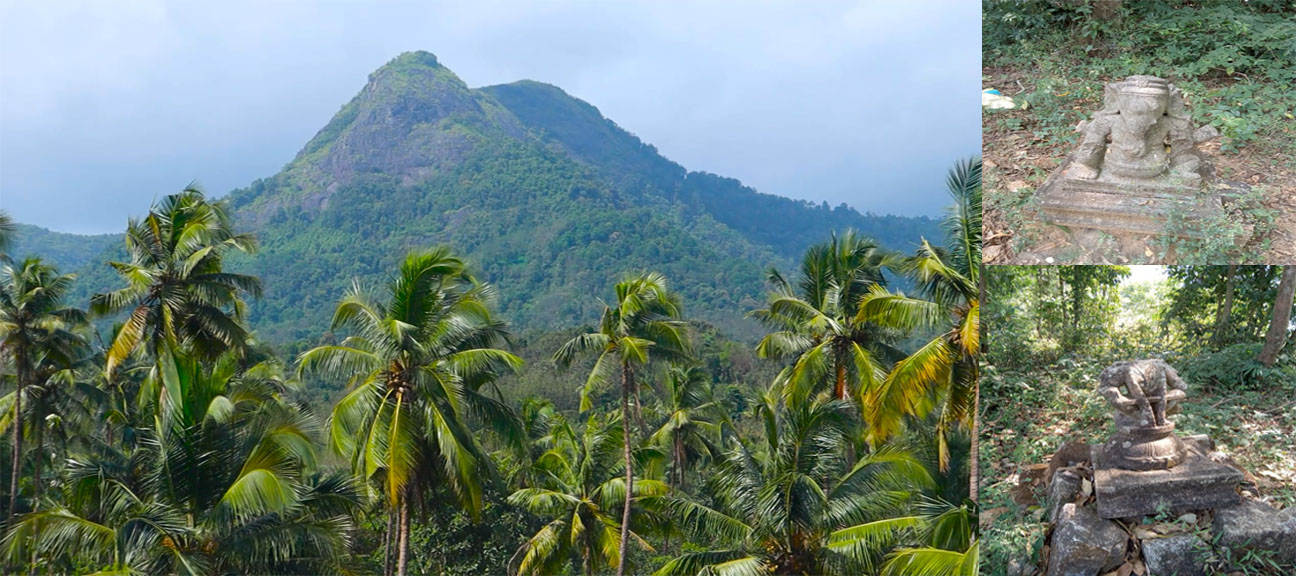
Palukachi Mala is the son of Sahyan, standing proudly as the crown of Kottiyoor. Palukachi remains a paradise for travelers by invoking the charms of nature. Palukachi Mala is definitely a place suitable for those who love trekking and adventure travel. Palukachi can be reached from Kottiyoor by taking the Dundunokki Road and Chungakkunnu Road. The journey, which is mostly through a residential area, gives the traveler a warm view of the daily labor of the migrant people. If you climb the places where a group of people have lived proudly, merging with nature, you will reach a place called St. Thomas Mount. After that, there is a dense forest. If you know the forest through the forest, where the sun's rays are reluctant to penetrate even at noon, you can reach the top of Palukachi Mala, which is full of wide grasses. If one clears away the tall grasses, a 360-degree aerial view of Kottiyoor Panchayat will be revealed to the traveler. Palukachi, which has everything a traveler needs after traversing the difficult path, will captivate the traveler. The sunrises and sunsets from here are watched by many.
Anticipating the tourism potential of this place, Kottiyoor Panchayat has joined hands with Kelakam Grama Panchayat and the Forest Department to launch the Palukachi Mala Eco-Tourism Project. A ticket counter, parking space and toilet facilities have been prepared at St. Thomas Mount, the base camp for trekking. Guards have also been appointed for the safety of tourists. Road work from Kottiyoor to this place is also in progress. There will be three routes to the base camp. One route is the Shanthigiri route, which is connected to Kelakam Atakkathodu, a rural tourism and plantation route. Another route, which has trekking potential, is from Chunkakunnu to Palukachi, and another route from the legendary route Nendunnokki to Palukachi is part of the project. A base camp and other facilities will be set up at the start of these three trails and at St. Thomas Mount, where the trails converge. The respective panchayats are also setting up museums and tourism-related facilities that include the geography and uniqueness of each area.
Resorts and Homestays
For the convenience of tourists, a number of resorts and homestays have been set up in various places in the panchayat to provide a safe base for tourists coming to Kottiyoor. Some of these include Chembarathi Resort in Ambayathoth, Happy Land Resort in Palchurat, and Neenos Apartment in Vengalodi.
Apart from these, Kottiyoor has many other places that attract the attention of tourists. The unknown peaks and hills of Bavali, the view points of the pass, the fog, and the coolness are also enough to attract tourists.
